








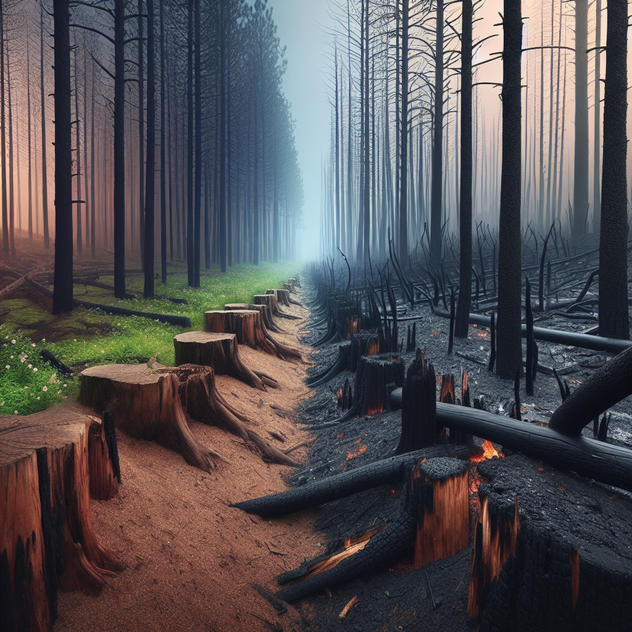
Walking through the remnants of a past wildfire feels like stepping into both a museum and a prophecy. The journey begins gently, with whispering pines and soft earth underfoot, but every scorched trunk and regrown sapling tells a story. Revisiting an old burn zone isn’t just about witnessing nature’s resilience — it’s an opportunity to glean insights into how future fire seasons might unfold. As the western U.S. faces increasingly severe wildfires, scientists and hikers alike turn to the past to understand the patterns that shape the future.
The Sierra Nevada, once again the stage for nature’s fiery drama, offers a living laboratory. By retracing the tracks of previous blazes, ecologists can study how forest recovery influences the intensity and spread of subsequent fires. Charred miles of land serve as a timeline, where new growth patterns, soil regeneration, and wildlife return become indicators of what lies ahead for nearby regions recently scarred by flame. This juxtaposition of past and present is more than symbolic — it’s a practical approach to wildfire forecasting and management.
What’s striking about retracing such trails is how time compresses; the 2013 fire that devastated vast areas of the Stanislaus National Forest might feel like ancient history, yet the signs of its fury still linger. When compared to the landscapes shaped by a more recent wildfire, the contrast highlights how ecosystems adapt and respond. These differences can yield clues not just for ecologists but for policymakers striving to implement fire-resistant strategies in vulnerable forest communities.
From a broader perspective, this experience deepens our understanding of the cyclical nature of life and land. Fire, though destructive, is also a tool of renewal—a harsh sculptor that reshapes terrain with potential. But human influence has disrupted that natural rhythm. Decades of fire suppression, urban expansion, and climate change have amplified the destructive force of today’s wildfires. Learning from the past isn’t optional; it’s essential if we hope to balance forest health with public safety.
Ultimately, standing in the shadow of old flames offers more than physical perspective—it cultivates a long view, a recognition that our stewardship today influences tomorrow’s landscapes. Revisiting these trails isn’t merely reflective; it’s instructive. If we let the lessons of burned forests guide our hands, perhaps the future of wildfire management can be one not defined by devastation, but by resilience and foresight.