







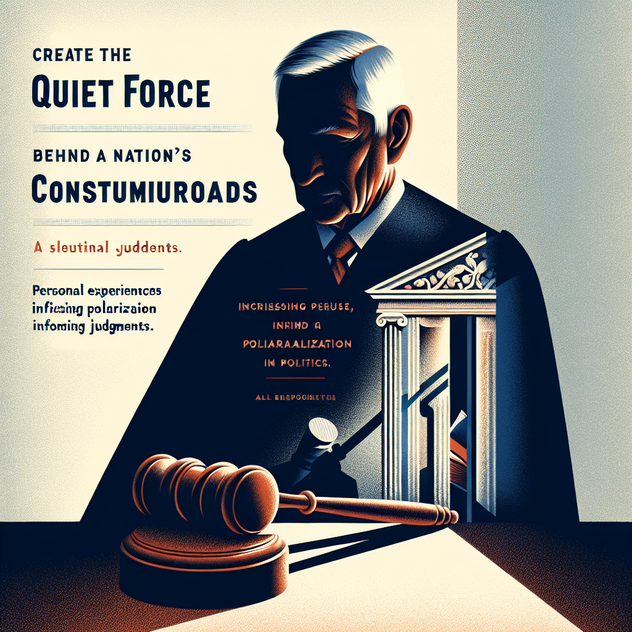
In a rare public reflection, retired Supreme Court Justice Anthony Kennedy recently opened up about the evolution of American law, the rising polarization in politics, and the deeply personal experiences that shaped his judicial philosophy. Known for his pivotal role in landmark decisions, Kennedy emphasized the enduring belief in liberty and human dignity as cornerstones of his work on the nation’s highest court. With a calm demeanor and thoughtful insight, he shared how his California upbringing instilled a profound respect for individual thought and civic responsibility.
Throughout his more than three decades on the Supreme Court, Kennedy often found himself in the ideological center, casting decisive votes in cases that defined the boundaries of abortion rights, marriage equality, and campaign finance. While appointed as a conservative, Kennedy’s nuanced view of constitutional protections frequently aligned him with the liberal wing, making him a crucial figure in deeply divided rulings. His reflections serve as a reminder that the judicial process, at its best, resists rigid partisanship in favor of a more principled pursuit of justice.
What stands out in Kennedy’s comments is not just his legal acumen, but his deep concern over the current state of American civic discourse. He expresses trepidation about the rise in vitriolic politics and the decline of civil engagement—a far cry from the more respectful disagreements of past decades. As someone who often bridged ideological gaps, Kennedy offers a compelling voice for restoring dialogue and mutual understanding in both law and politics.
His boyhood memories of Sacramento, the quiet rituals of small-town life, and the influence of a civic-minded father offer a window into the making of a jurist who valued restraint, empathy, and the power of legal precedent. These formative experiences seemed to manifest in his judicial decisions, often characterized by a balance between constitutional fidelity and human compassion. Unlike more doctrinaire colleagues, Kennedy appeared driven not by ideology, but by a deep belief in the Constitution’s capacity to protect evolving notions of freedom.
In a time when the Supreme Court is under increased scrutiny and polarization continues to shape national conversation, Kennedy’s reflections provide more than just a retrospective—they serve as a subtle plea to future jurists and citizens alike. His career reminds us that legal decisions have human consequences, and that moderation, informed by empathy and civic duty, is a powerful guide. Ultimately, Kennedy’s quiet legacy may be his greatest: a belief that liberty, though complex, must always remain at the heart of American law.