








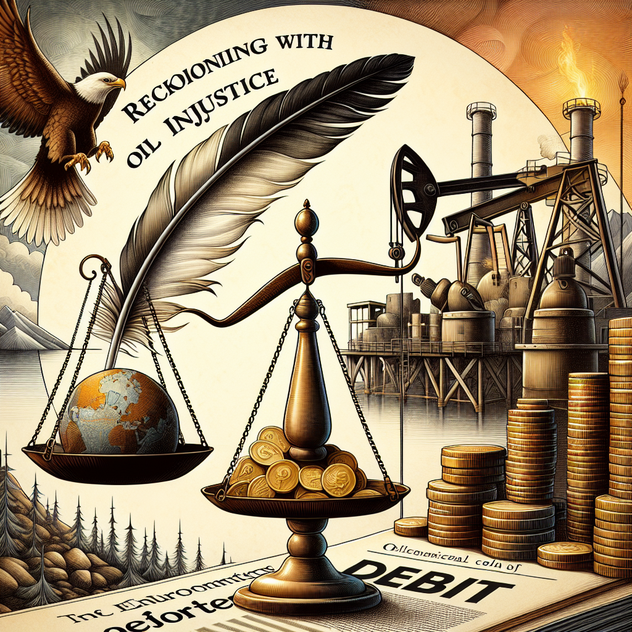
In a recent column, Ojibwe writer and economist Winona LaDuke brought attention to a long-overlooked issue: the moral and environmental debt the United States owes to Venezuela. Her perspective is rooted not only in economic thought but in Indigenous values that center reciprocity, sustainability, and justice. As the largest petroleum consumer for decades, the United States has significantly benefited from Venezuela’s vast oil resources, often at the expense of Venezuelan sovereignty and ecological well-being.
For years, American foreign policy has treated Venezuela as a strategic asset, seeking to exert influence over its natural resources while supporting economic sanctions that have crippled the country’s infrastructure. Meanwhile, real lives are affected—lives of people whose communities are tied directly to the land and whose futures are compromised by decisions made far from their borders. The asymmetry of power in this relationship highlights a broader pattern of exploitation that echoes colonial dynamics, now repackaged by modern geopolitics.
LaDuke’s argument transcends the standard narrative of international relations. She urges a type of accountability that is rarely part of mainstream conversations—an ethical and ecological acknowledgment of what has been extracted and damaged. It’s a call to rethink development not as a race to wealth through resource extraction, but as a pathway toward mutual respect and care among nations. This perspective is crucial as we face a climate crisis that demands we reevaluate our connection to the Earth and to each other.
In an era dominated by climate summits and green energy goals, the U.S. cannot afford to overlook the consequences of its historical and ongoing reliance on fossil fuels sourced from abroad. The path toward climate justice requires confronting uncomfortable truths, including how policy decisions have contributed to the destabilization of resource-rich nations like Venezuela. It’s not enough to advocate for clean energy at home while ignoring the environmental degradation and human suffering inflicted elsewhere to feed past consumption.
Winona LaDuke’s message is a reminder that real justice includes repair. Acknowledging the debt to Venezuela is not just about foreign aid or lifting sanctions—it’s about recognizing shared human dignity and the responsibility to restore balance where exploitation has occurred. Only by facing these truths can we hope to build a future based on equity, sustainability, and authentic international solidarity.