








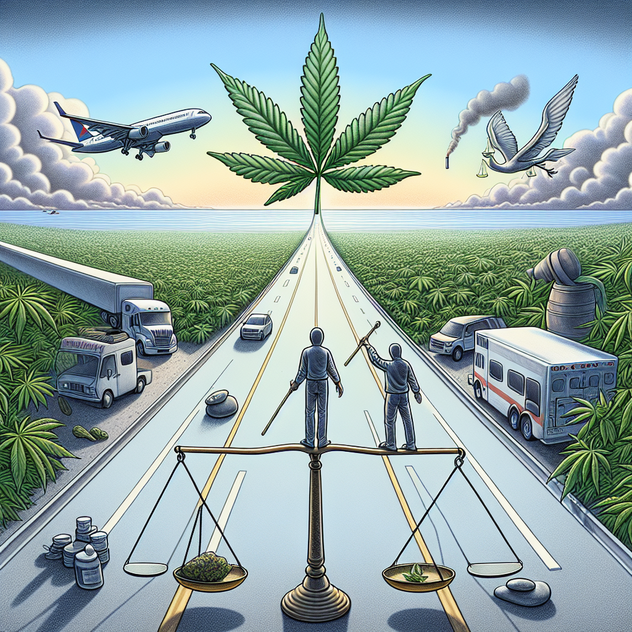
President Trump’s recent executive order pushing to accelerate the rescheduling of cannabis has reignited national conversations around drug policy, public health, and transportation safety. While this move is being hailed by some as a step toward rectifying outdated federal statutes, it has also raised serious concerns among safety advocates, such as the National Safety Council (NSC). The council warns that any shift in how cannabis is classified must be accompanied by targeted policies to minimize the associated risks—particularly those stemming from impaired driving and workplace hazards.
The crux of the controversy lies in the fine print: reclassifying cannabis may suggest to the public that it’s largely harmless, potentially leading to a spike in misuse. Unlike alcohol, the science of cannabis impairment is still evolving, and there are no universally accepted roadside tests for measuring marijuana influence. This creates a major blind spot for safety enforcement. The NSC’s cautionary stance reflects a broader societal need to balance individual liberties with protective public policy frameworks.
From a public health perspective, the rescheduling of cannabis could facilitate more credible research and the development of regulatory standards for consumption. However, history teaches us that aggressive policy shifts without proactive safety measures can lead to unintended consequences. As cannabis becomes more accessible, its integration into daily life could mirror that of alcohol—making it crucial to build educational campaigns and workplace protocols before or alongside legislative changes.
Businesses and institutions will also need to rethink policy implementation around drug use, especially in industries where focus and physical performance are critical. For sectors like transportation and construction, legal status doesn’t equate to safety. Employers will be challenged to navigate the complexities of ensuring safety while respecting individual rights, which will likely spark debates around drug testing, tolerance thresholds, and legal liabilities in the event of accidents.
In conclusion, while President Trump’s executive order may indeed streamline cannabis policy and reflect shifting public opinion, it underscores the importance of comprehensive readiness. We cannot afford to view rescheduling in isolation. As we tread this evolving path, we must invest in public education, scientific research, and responsible governance to ensure that progress in one area doesn’t incur a cost in another. The road to reform must be paved with foresight and precaution, not just political expediency.