








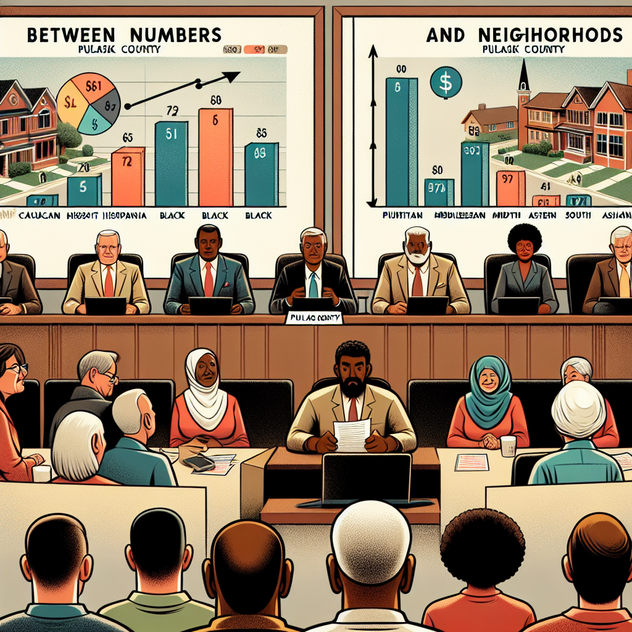
The recent town hall in Pulaski County held to address concerns surrounding property value assessments was a prime example of a growing disconnect between bureaucratic procedure and public perception. While local officials from the Property Valuation Administrator’s (PVA) office presented a detailed breakdown of the assessment process—emphasizing formulas, comparables, and statutory obligations—residents shared stories loaded with frustration, confusion, and skepticism. The atmosphere suggested that understanding the ‘how’ of assessments didn’t offer much comfort when the ‘why’ still felt unfair.
Residents spoke candidly about sudden hikes in property values and the implications these have on their taxes, budgets, and long-term plans. One recurring theme was unpredictability—homeowners expressed feeling blindsided by substantial increases and questioned the consistency of assessments even among similar neighborhood properties. While officials attributed these changes to market dynamics and state-mandated timelines, for many citizens, the purely data-driven explanations failed to address lived experience or the fear of being priced out of their own communities.
In analyzing this delicate exchange, it becomes clear that the real issue isn’t just about numbers—it’s about trust. Property assessments affect real lives in tangible ways, yet the methodology often remains opaque to the average person. That gap in transparency fosters suspicion and can erode the credibility of public offices. If assessments are to be viewed as fair and equitable, public agencies must go beyond spreadsheets and host deeper conversations about systemic equity, neighborhood dynamics, and the human side of public policy.
It’s also important to note the emotional energy present at these forums. For homeowners, their property isn’t just a financial asset—it’s their history, sanctuary, and stake in the community. When assessments suddenly escalate, it can feel less like a neutral market correction and more like an institutional intrusion. Balancing fiscal responsibility with social accountability is a fragile dance, and local governments must approach it with both technical rigor and emotional intelligence.
Ultimately, the Pulaski town hall served as a microcosm of broader tensions in local governance. While data and regulation play essential roles in public administration, they must be accompanied by empathy, clarity, and dialogue. The success of property assessments shouldn’t be measured solely by procedural correctness, but by how well they resonate with—and serve—the people who make a community home.